I've been having a lot of conversations with people in the beauty industry.
Some already understand that sustainability is no longer a peripheral issue. Others still see it as something distant, almost as a matter of communication, reputation, or positioning.
But that's a dangerous decision. And here's why:
In 2026, sustainability is becoming one of the main forces transforming global industry.
More than a reputational differentiator, it is beginning to directly influence competitiveness, innovation, investment, market access, and strategic positioning. This movement is driven by the climate crisis, the increasing exposure of supply chains to logistical and regulatory risks, the advancement of the circular economy, and consumers who are increasingly attentive to consistency between words and actions. All of this is about economic and market risk.
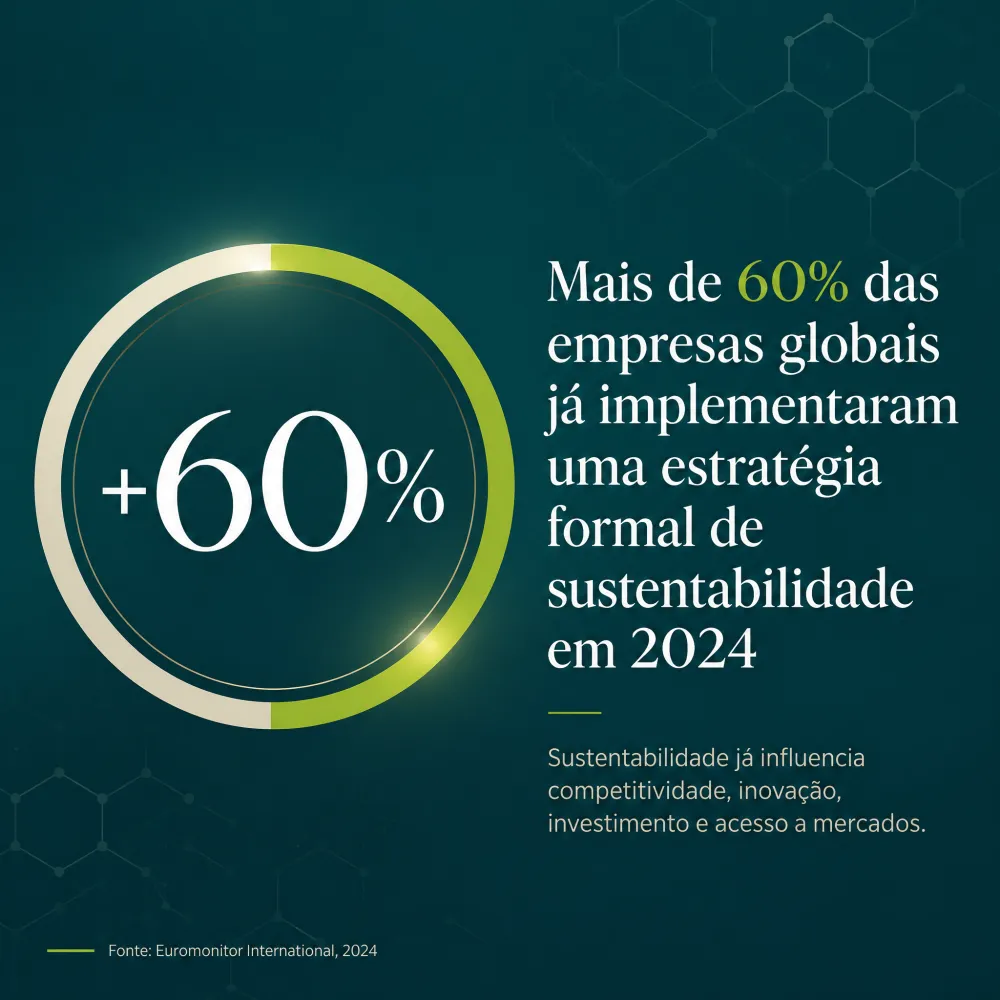
More than 60% of global companies have already implemented formal sustainability strategies.
According to Euromonitor International, 20% of global sales in 2023 came from products carrying sustainability claims, with growth exceeding that of products without such positioning. This shows how sustainability is increasingly moving away from being a parallel topic and becoming part of core growth decisions.
This means sustainability is no longer just a brand choice. It's a business choice.
And this transformation is also reflected in consumer behavior.
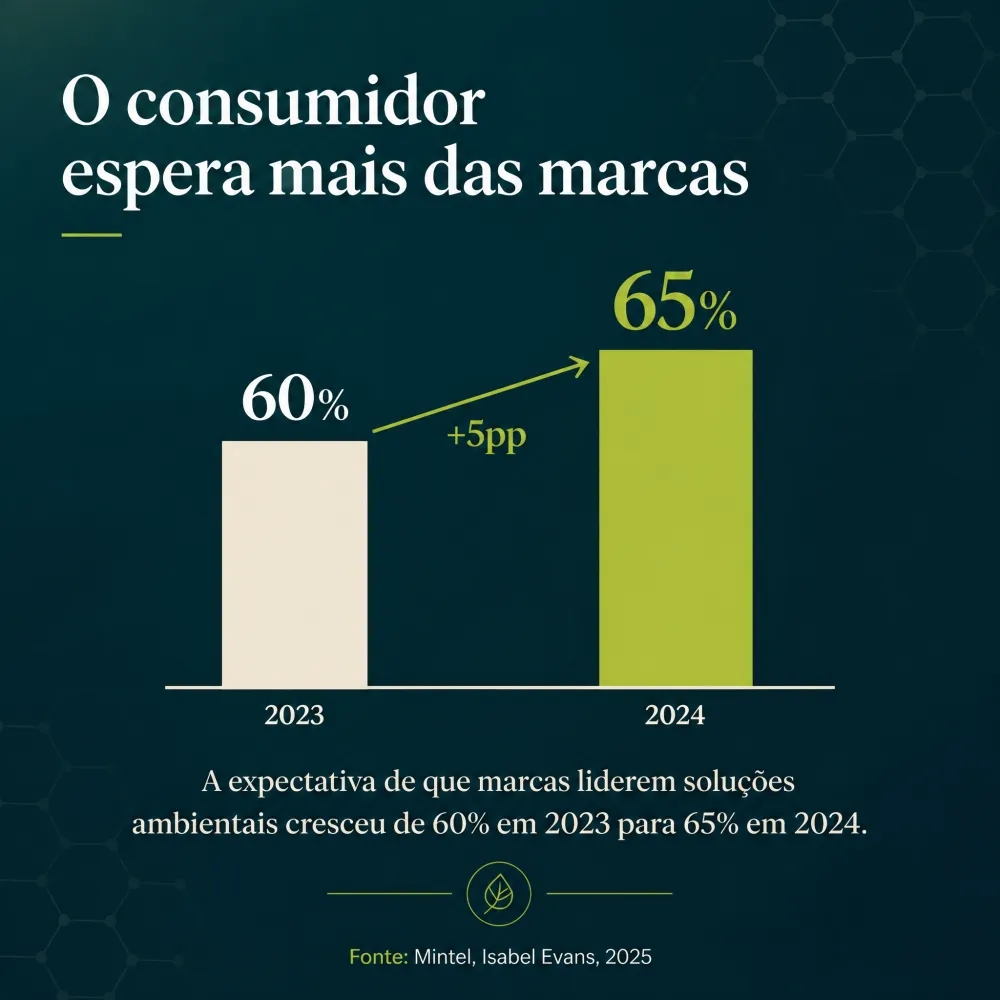
Last year, I read an article by Isabel Evans at Mintel that offered a very important perspective on consumers: they don't buy based on performance alone.
Increasingly, they evaluate efficacy, origin, transparency, purpose, safety, and environmental impact. This significantly changes how beauty brands need to think about their products, because it's no longer enough to claim that a cosmetic product is natural, sustainable, or eco-friendly. Brands need to demonstrate why it works, how it was produced, where it comes from, and what impact it generates throughout the value chain.
In her article, Isabel shows that we are moving away from a phase of generic environmental claims toward an approach that demands greater specificity. In other words, rather than simply saying something is "green" or "eco," brands need to explain more clearly what problem they are solving and how that initiative connects to their industry, their product, and consumers' real concerns.
Beauty trend data associated with Mintel indicates that 66% of Japanese consumers are interested in products with eco-friendly attributes, while 64% of French consumers would prefer natural ingredients grown in laboratories over synthetic ingredients, signaling openness to beauty solutions with greater technological control, clearer origins, and lower environmental impact.
What was once a competitive differentiator is now becoming a minimum market expectation.
And perhaps this is the most important point for anyone working in beauty: consumers still want results. They still want sensorial experience, safety, efficacy, and performance. But now they also want consistency.
According to research by PwC, four out of five consumers say they are willing to pay more for sustainable products, provided they perceive genuine value, consistency, and functionality.
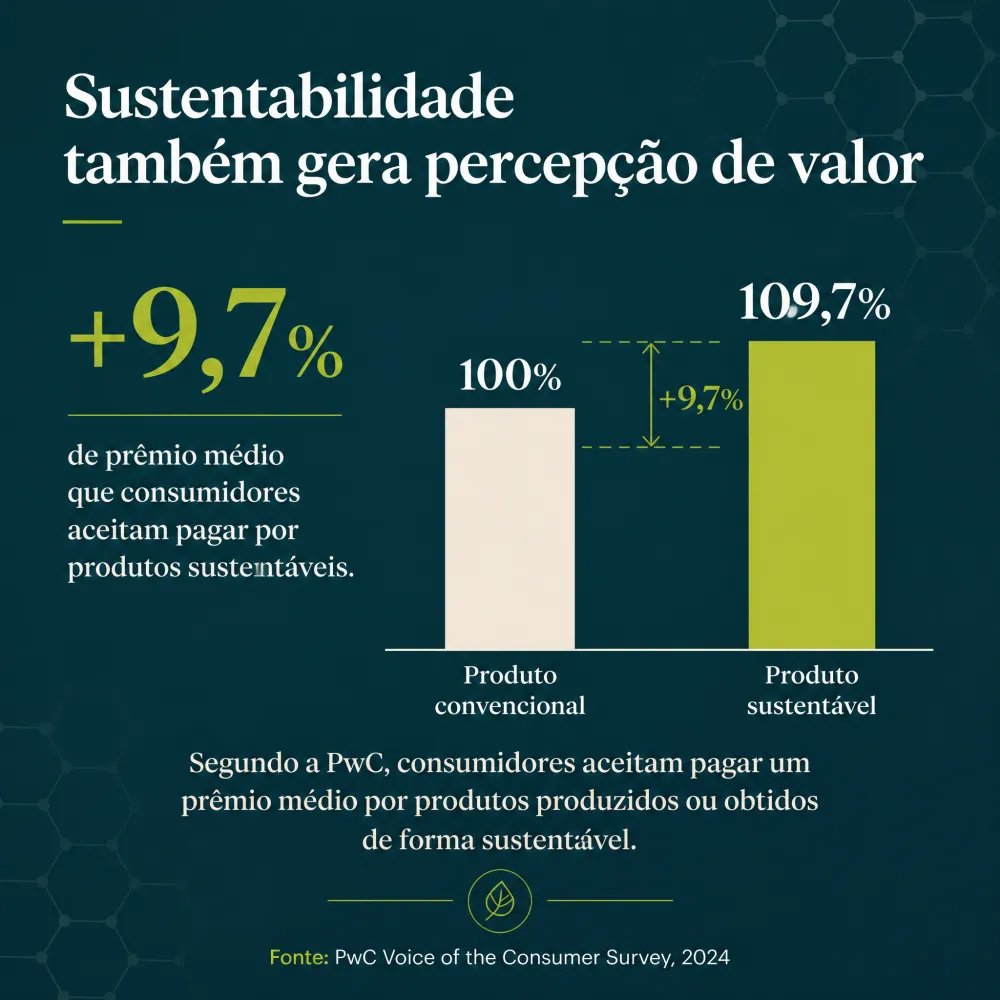
Sustainability alone is not enough. Performance alone is also starting to fall short. The challenge lies in bringing the two together.
In this scenario, companies that still rely on broad or difficult-to-verify claims face a growing risk of greenwashing, with a direct impact on reputation and customer loyalty. The loss is not only commercial; it's also a loss of trust, especially among consumers who associate purchasing decisions with purpose and positive impact.
And trust, in the beauty market, is an enormous asset.
WGSN reinforces this movement by showing that interest in ethically produced products is growing rapidly, with a 62% annual increase in interactions related to ethical consumption. Trust, transparency, and genuine responsibility are becoming central purchasing criteria, reinforcing a market dynamic in which credibility increasingly depends on evidence.
Generational differences, together with digitalization, amplify this effect. While Baby Boomers continue to value durability and brand loyalty, Generation X remains focused on quality and rational comparison, Millennials place greater importance on experience, flexibility, and purpose, and Generations Z and Alpha show less tolerance for inconsistencies between words and actions. As a result, industrial sustainability is responding not only to environmental pressures but also to new social and economic demands.
In the beauty industry, this creates an important shift, where sustainability stops being solely about reducing impact and starts to mean process intelligence.
Traceable ingredients, reusable packaging, clean formulations, transparent supply chains, and low-environmental-impact processes are increasingly demanded by the market, becoming indicators of industrial innovation.
In 2026 and beyond, innovation will increasingly be measured by the ability to integrate applied science, circularity, proven functionality, traceability, inclusion, operational efficiency, and measurable environmental responsibility. The market is seeking more efficient and circular supply chains, solutions that save time, reduce operational friction, and deliver convenience responsibly. Expectations are also growing for production models capable of combining technology, functionality, cultural diversity, inclusion, and sustainability, while expanding the participation of communities and consumers in decisions that affect products and value chains.
In practice, three movements are gaining momentum:
Waste is becoming a strategic raw material. Plant biomass, agro-industrial co-products, and industrial by-products are gaining technological value because they make it possible to increase resource utilization, reduce losses, and improve material efficiency.
Mintel highlights the advancement of upcycling, precision fermentation, and biofabrication as responses to the demand for lower environmental impact without sacrificing performance.
The origin of raw materials, supply chain predictability, and the ability to demonstrate environmental impact are increasingly being examined not only by consumers but also by investors, regulators, and major corporate buyers.
This significantly changes the logic of portfolio development.
As Joaquim Araujo often says in our marketing meetings: it's not just about choosing an ingredient that "looks sustainable." It's about building a narrative that can be supported technically, commercially, and from a regulatory standpoint.
Sustainability alone is no longer enough. I don't know about you, but I've been seeing more and more simplified formulations and formats. The so-called clean beauty movement is consolidating streamlined yet powerful formulations that are traceable and have less compositional complexity.
And no, this isn't just a European thing. These trends are also intensifying in Brazil.
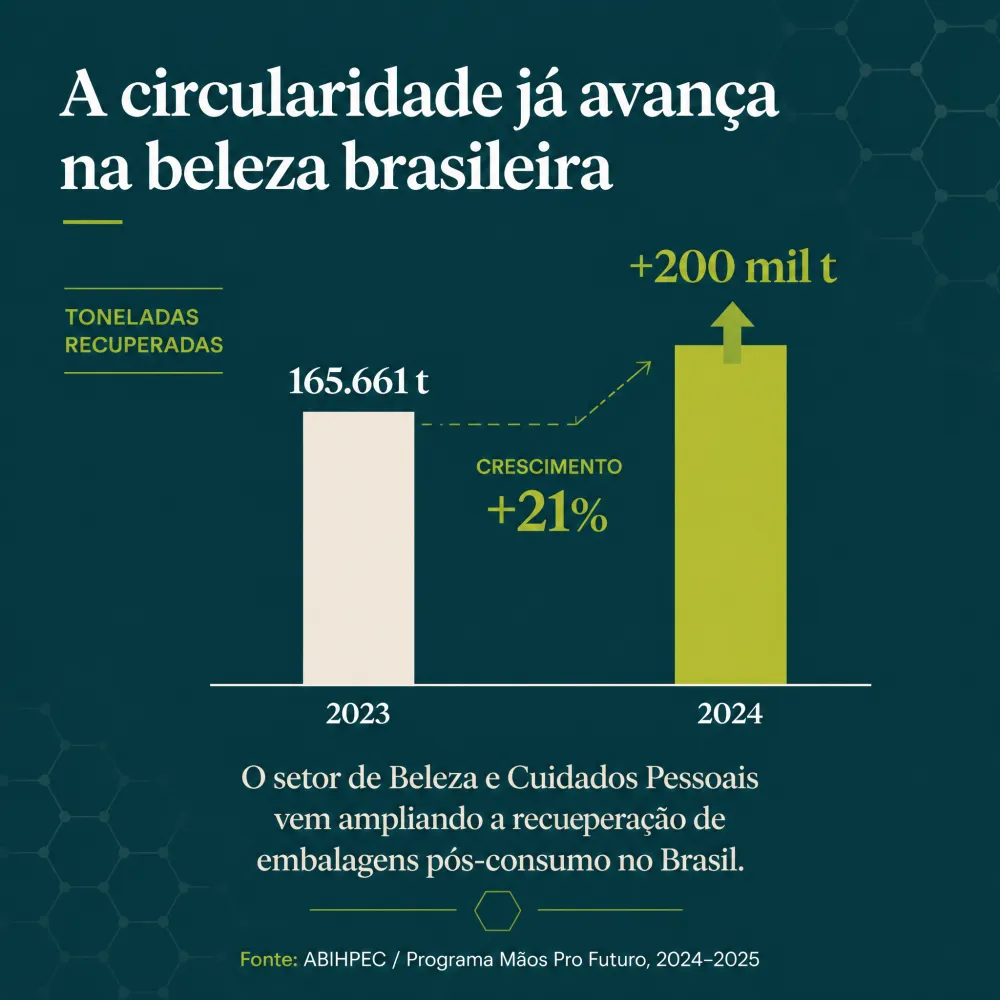
ABIHPEC — Brazilian Association of the Personal Hygiene, Perfumery and Cosmetics Industry points to consistent progress in packaging circularity and waste recovery, with structured reverse logistics and reuse programs. Meanwhile, ApexBrasil views sustainability as a tool for increasing competitiveness and generating international business opportunities.
This point is particularly relevant for Brazilian brands.
We have biodiversity, scientific knowledge, natural active ingredients, supply chains that can be enhanced, and an enormous opportunity to transform all of this into high-value-added products.
But there is a difference between using sustainability as a talking point and using sustainability as a strategy.
In practice, sustainability in the beauty industry is moving beyond a peripheral response to environmental requirements and taking on a strategic role in growth decisions and long-term competitiveness. More than reducing harm, it is becoming a matter of applied industrial intelligence, long-term vision, and the genuine ability to generate value in increasingly selective supply chains.
After 2026, being sustainable will not be enough. Companies will need to prove that sustainability improves processes, enhances products, reduces risks, strengthens reputation, and creates an economically viable future. And that's why I believe beauty brands need to look at their portfolios now.
Not just by asking, "Is this product sustainable?" But also:
Does this ingredient have a traceable origin? Does this formulation deliver real performance? Does this supply chain reduce impact or simply communicate better? Is this product ready for more demanding consumers? Does this innovation strengthen the brand in the long term?
Here at Nanoterra, we develop cutting-edge technologies and cosmetic ingredients that were designed to be sustainable from the outset. We made that choice, and we reaffirm it through governance.
We create sustainable, nanotechnology-based ingredients to help cosmetic brands position themselves with greater confidence in this market. That's why we're always paying attention to how our industry evolves, which movements are gaining momentum, and how science, performance, and sustainability can move forward together.
Want to learn more about our products? Disagree with something I've written, or just want to talk a little more about the subject? Say hi on our profile.
- Euromonitor International. Three in five Companies Implemented a Sustainability Strategy in 2024: Euromonitor International. 2024. Dsiponível em: https://www.euromonitor.com/press/press-releases/september-2024/three-in-five-companies-implemented-a-sustainability-strategy-in-2024-euromonitor-international
- Mintel. The Evolution of Sustainability: From Green Claims to Eco-Specific. 2025. Disponível em: https://www.mintel.com/insights/consumer-research/the-evolution-of-sustainability-from-green-claims-to-eco-specific/
- NutraIngredients-Asia. Beauty trends 2025: Key factors set to shape APAC beauty market. 2025. Disponível em: https://www.nutraingredients.com/Article/2025/01/07/beauty-trends-2025-key-factors-set-to-shape-apac-beauty-market/
- Mintel. 2025 Global Beauty and Personal Care Trends. Material citado em KisaCoresearch, 2024. Disponível em: https://kisacoresearch.com/sites/default/files/documents/mintel_2025_global_beauty_and_personal_care_trends_poster_digital.pdf
- PwC. Consumers willing to pay 9.7% sustainability premium, even as cost-of-living and inflationary concerns weigh: PwC 2024 Voice of the Consumer Survey. 2024. Disponível em: https://www.pwc.com/gx/en/news-room/press-releases/2024/pwc-2024-voice-of-consumer-survey.html
- ABIHPEC. Como o setor de Beleza e Cuidados Pessoais contribui para a economia circular? Disponível em: https://abihpec.org.br/economia-circular-cosmeticos-brasil/
- ABIHPEC. Programa Mãos Pro Futuro, pioneiro em logística reversa, completa 18 anos de atividade, atingindo 31,6% de recuperação de materiais em 2023. 2024. Disponível em: https://abihpec.org.br/release/programa-maos-pro-futuro-pioneiro-em-logistica-reversa-completa-18-anos-de-atividade-atingindo-316-de-recuperacao-de-materiais-em-2023/
- ApexBrasil. Torne sua empresa sustentável para ser mais competitiva. Disponível em: https://www.apexbrasil.com.br/torne-sua-empresa-sustentavel-para-ser-mais-competitiva